


Building Data Lineage That Actually Works

How leading financial institutions actually prove compliance, predict change, and protect data use.

img_intro

Most financial institutions have invested millions in data lineage. Most have watched those initiatives stall or fail - often more than once. Catalogs, spreadsheets, consultants, and open-source tools promise answers, yet auditors still aren’t satisfied and teams still don’t trust the outputs when it matters most.

This new whitepaper explains why data lineage keeps failing—and how organizations like HSBC, M&T Bank, LSEG, and Royal London Asset Management broke the cycle and built something sustainable. 

Why lineage initiatives fail

 The whitepaper examines four failure patterns that organizations keep repeating:

icn_technically-accurate

Technically accurate lineage that business teams can’t use

icn_outdated-documentation

Documentation that becomes outdated within months

icn_not-scalable

DIY solutions that don’t scale beyond a handful of systems

icn_lacking-business-context

Open-source lineage rejected by regulators for lacking business context
Across all four, the same root cause appears: organizational barriers that technology alone can’t solve.

What regulators now expect

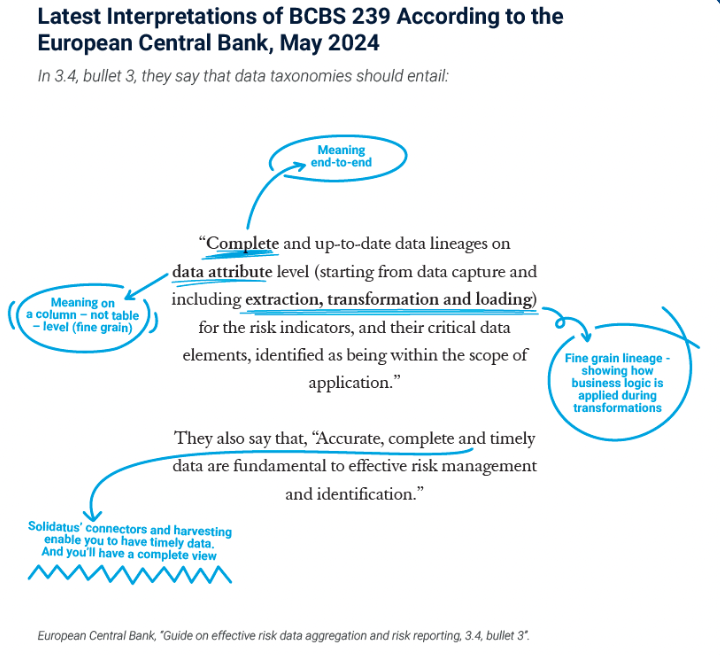
The European Central Bank’s May 2024 BCBS 239 update requires “advanced lineage at the data attribute level.”


That means column-level traceability, clear business meaning, and evidence that lineage is actively used - not just documented. Most tools still don’t meet this bar.

BCBS 239 Screenshot

What successful institutions did differently

img_why-successful-institutions (1)

The organizations that succeeded made three strategic decisions:

·    Prove compliance by aligning incentives so lineage exists and stays current
·    Predict impacts by connecting technical flows to business outcomes
·    Protect data use with trusted, bi-temporal lineage and continuous validation

The results speak for themselves: faster audits, lower operational costs, and confident use of data - including AI - at scale.

Download Whitepaper